Your Art course and AI course
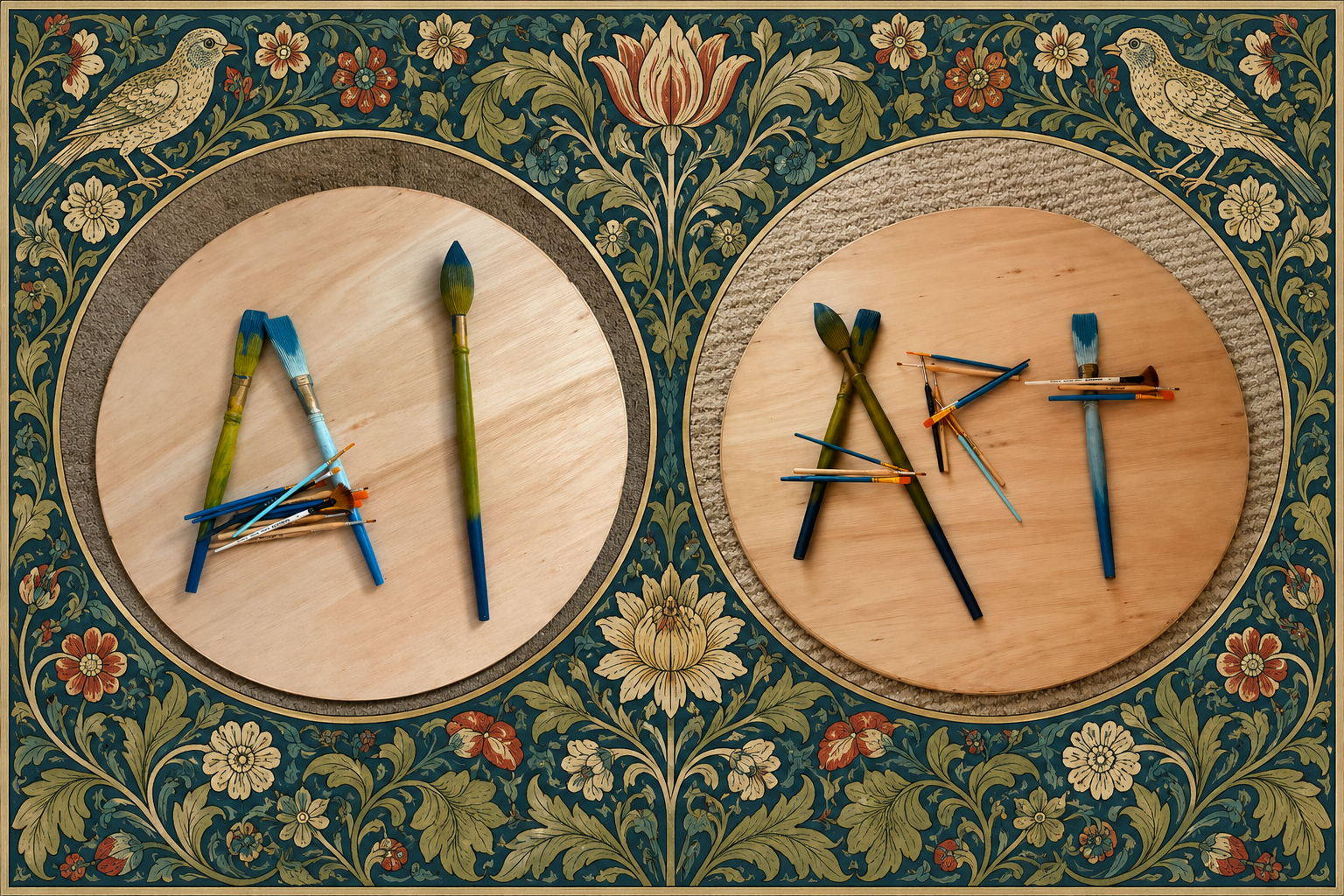
Learn to Draw, Paint, Create and Experiment with Artificial Intelligence
Discover how traditional drawing or painting and AI art can work together
Have you ever wondered how to turn your own pencil sketch, painting or photograph into a completely different style of artwork?
Our Art and AI and Acrylic Painting Course combines traditional drawing or painting techniques with the creative possibilities of artificial intelligence (AI). Whether you’re a complete beginner or already enjoy painting, drawing or photography, we’ll show you how to create original artwork and then experiment with AI to develop it further.
Learn basic drawing, acrylic painting techniques, colour mixing, pencil sketching and simple drawing skills. Then discover how AI image editing and AI art generators can help you explore different backgrounds, artistic styles, colours, expressions and compositions.
You don’t need any previous experience of painting or artificial intelligence. We aim to make art enjoyable, accessible and creative.
Here is an example of what you will do
From an Original Drawing or Acrylic Painting to AI Artwork
Ten-Steps
We began with an original acrylic painting inspired by a screenshot from a video. The painting featured two people: a woman at the top with blue hair and a black dress, and a man below wearing a yellow hoodie.
We strengthened the black outlines of their clothing, added colour and developed the composition using traditional acrylic painting techniques.
We then decided to explore how AI could transform our original painting while keeping its essential character.
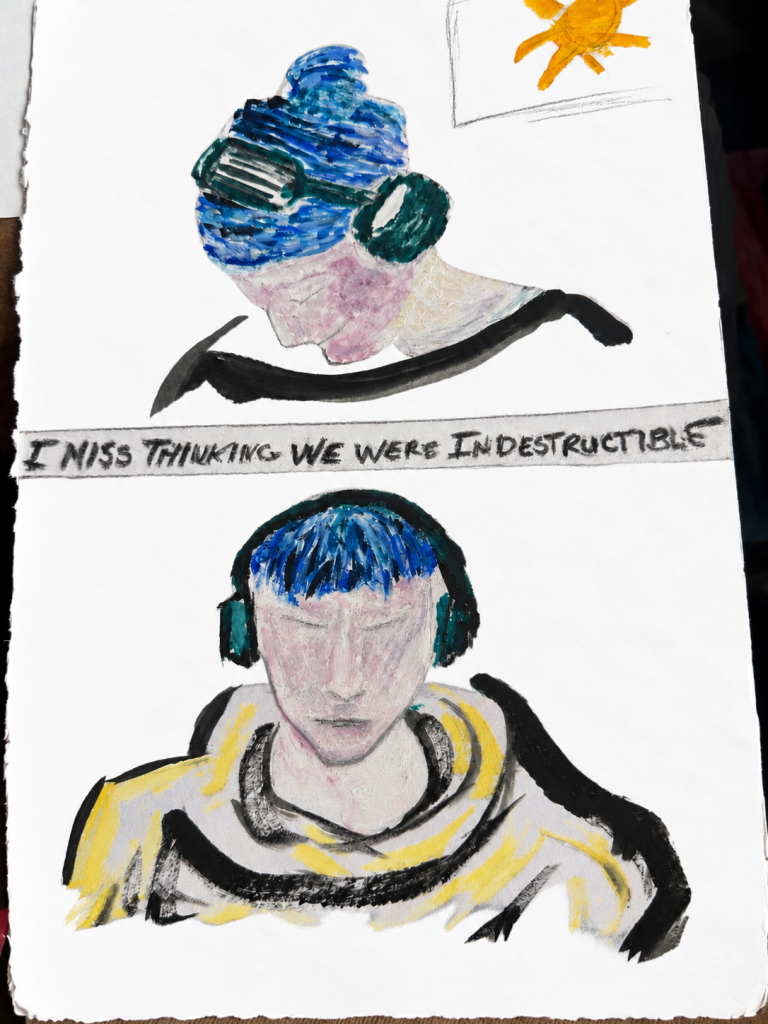
The Original Inspiration
Our starting point was a screenshot taken from a video, before we had created our acrylic painting. This gave us the original composition and the inspiration for the two figures.
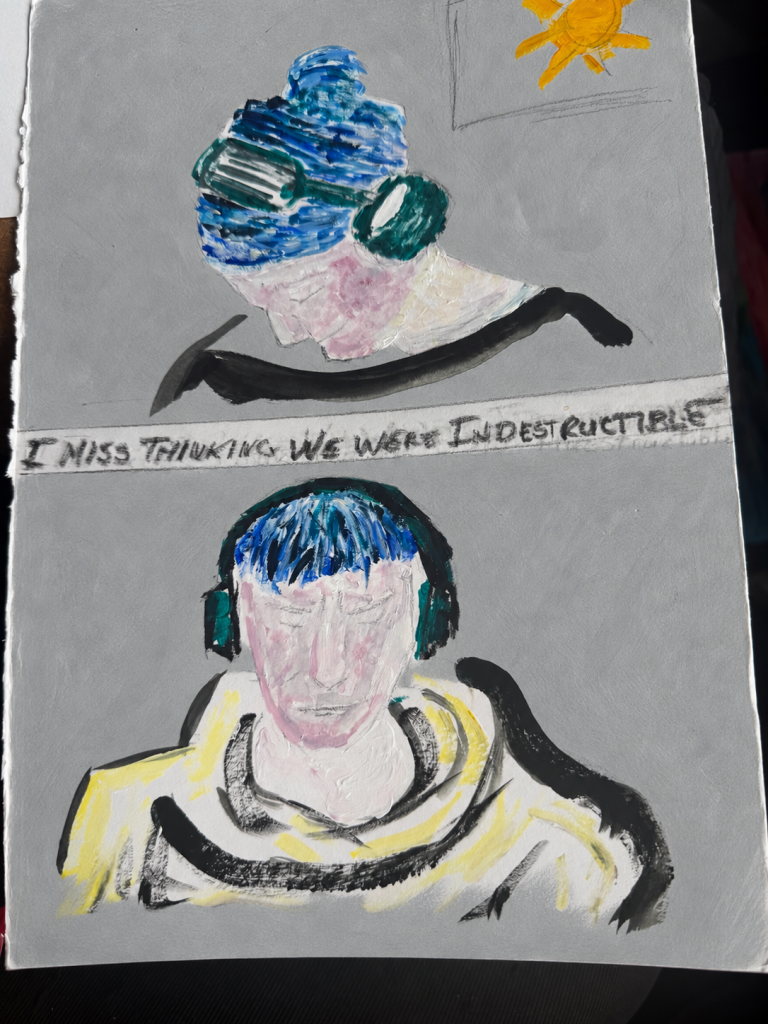
Exploring Facial Expressions and Emotions
We studied the faces, their positions and expressions. Both figures appeared rather sad, so we decided to develop a background that reflected their emotions.
A bright blue sky could have created an entirely different atmosphere, but we wanted to explore darker colours, grey skies and a more emotional painting.
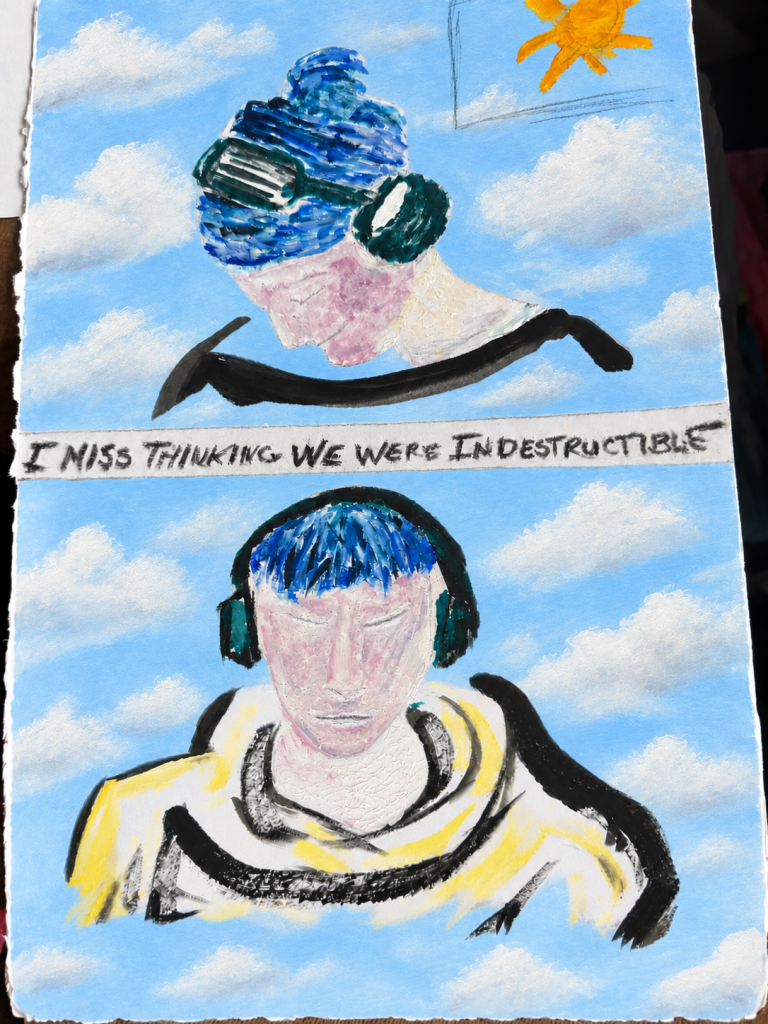
Adding a grey sky background
Using AI image editing, we introduced a grey sky behind the figures.
This immediately changed the mood of the painting, although we felt that the first version contained too many clouds.
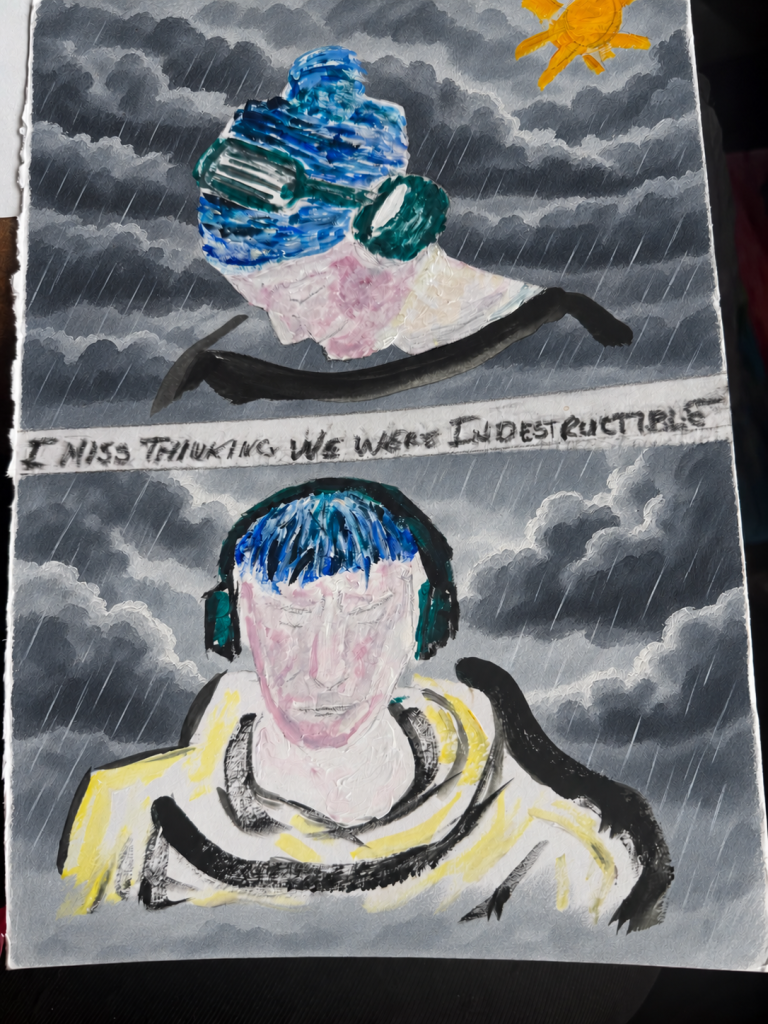
Experimenting with Rain Clouds
We looked at the appearance of real rain clouds and explored how different cloud shapes could improve the picture.
We wanted realistic grey and white clouds, darker undersides, a little sunlight breaking through and the suggestion of approaching rain.
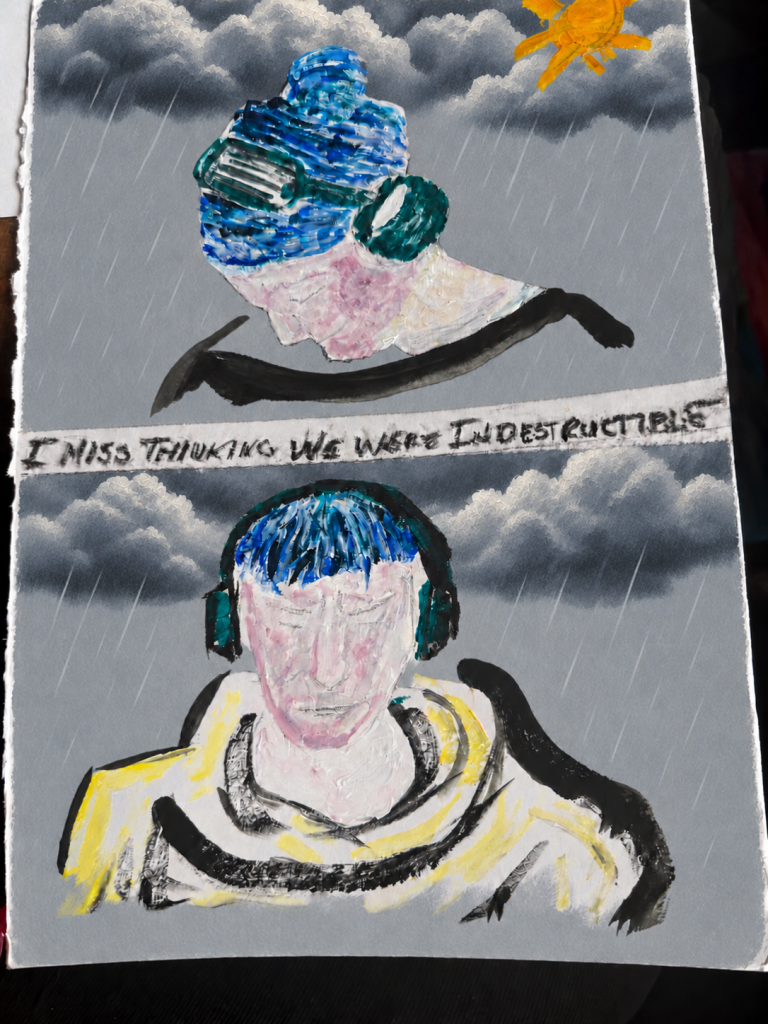
Adding Rain and Sunlight
We developed the stormy sky further, introducing rainfall, areas of light and more natural cloud formations.
This helped create a dramatic atmosphere without losing the original figures.
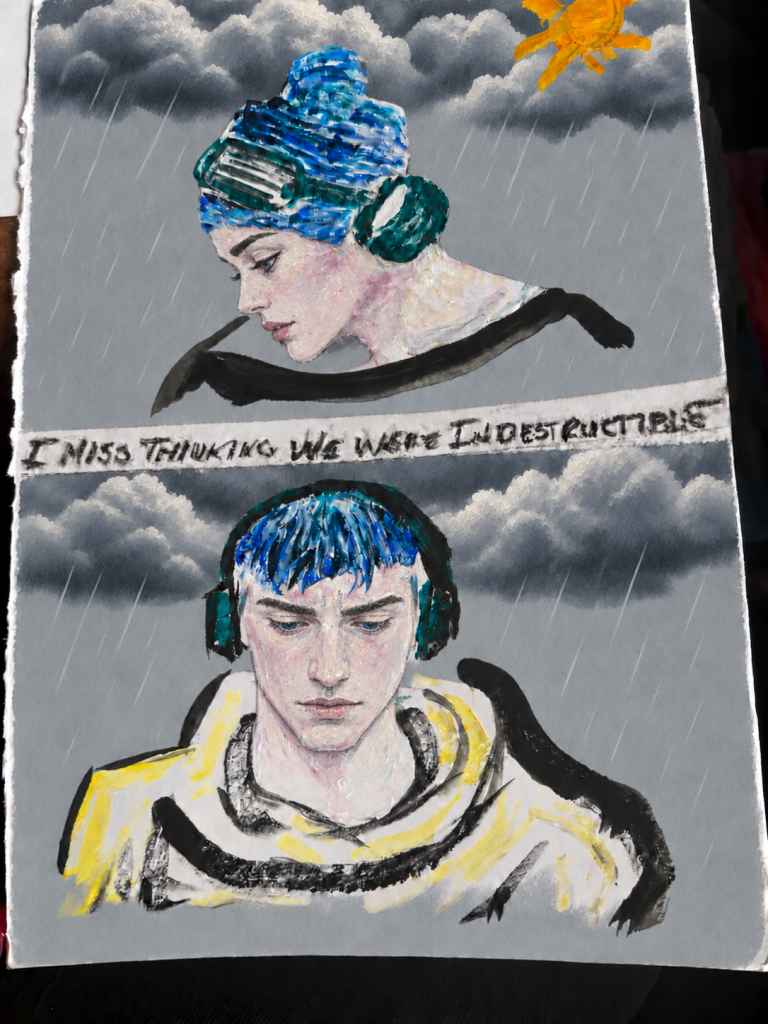
Creating Sad Facial Expressions
We used AI to add and refine facial features, giving the woman and man more recognisable expressions of sadness.
This demonstrated how relatively small changes to a face can alter the emotional impact of a painting.
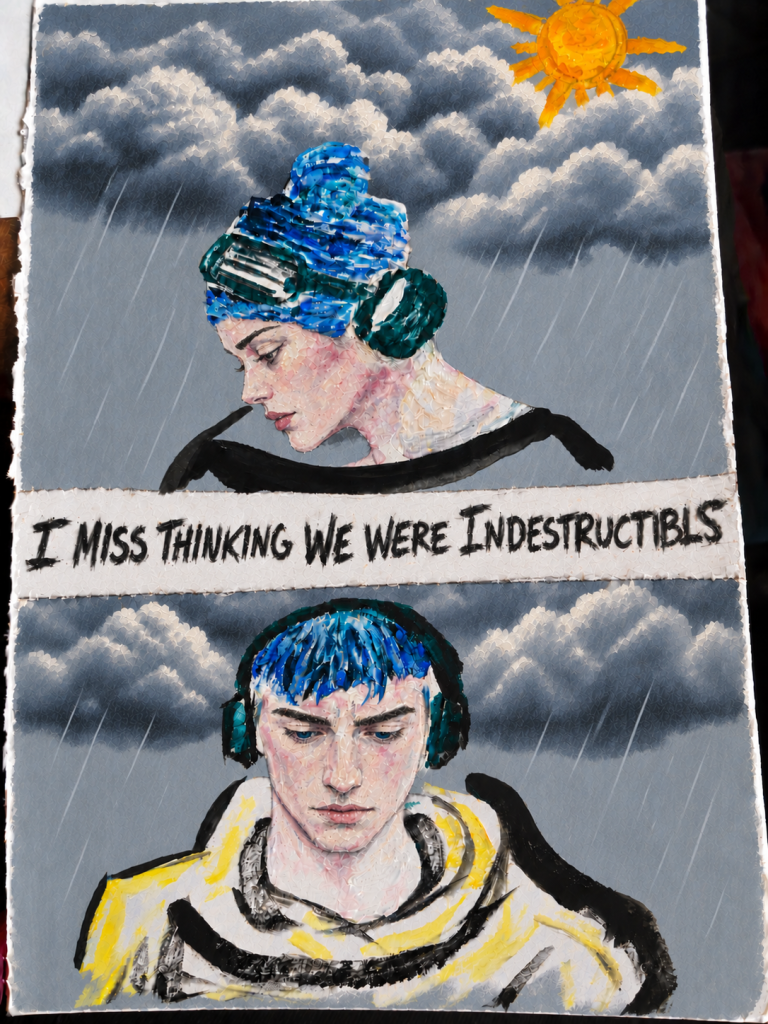
Improving Our AI Instructions
We discovered that the words used to instruct AI are extremely important.
By improving our descriptions and giving more precise instructions, we were able to achieve results closer to what we wanted.
This is known as AI prompting, an important skill that we introduce during our art and AI lessons.
Improving the Composition
Picture 8 – Improving the Composition
We adjusted the position of the figures, particularly the woman’s head and neck, to improve the overall balance of the artwork.
We also discovered that AI doesn’t always follow instructions accurately, even when they seem perfectly straightforward!
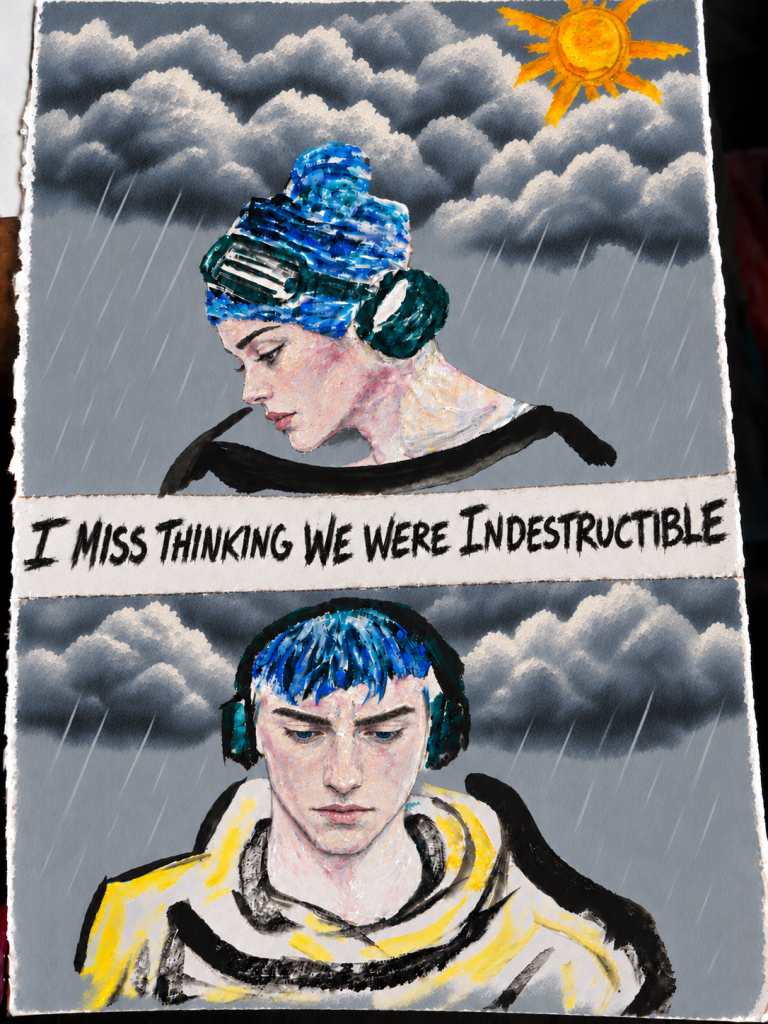
Can You Spot the Difference?
We carefully compared the different versions, checking for mistakes, unwanted alterations and small changes that AI had introduced.
Can you spot what has changed?
This is one of the most interesting parts of working with artificial intelligence. Sometimes it produces unexpected improvements, while at other times it changes something you specifically asked it to leave alone.
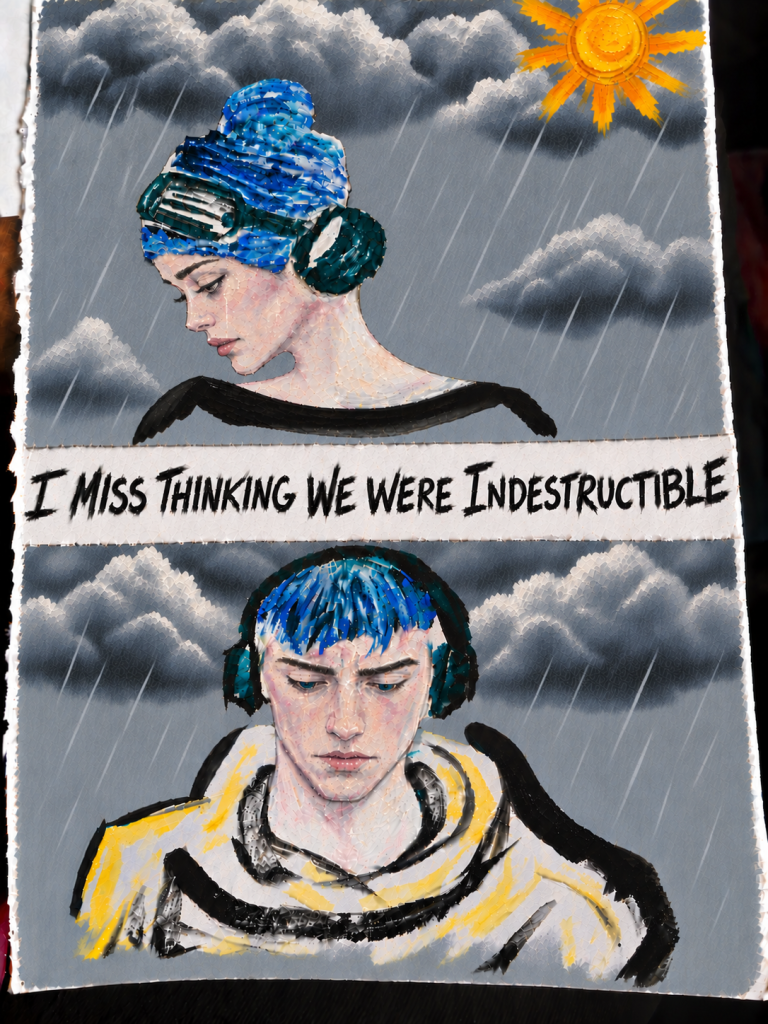
Our Finished AI-Assisted Painting
Our final picture brought together the original acrylic painting, improved facial expressions, carefully positioned figures and a dramatic grey sky with rain clouds. We were pleased with the result, particularly because the artwork still originated from our own painting. But this wasn’t the end of the experiment.
Transform Your Own Art into Famous Painting Styles Using AI
One of the most enjoyable aspects of AI art is experimenting with different artistic styles.
Starting with our original acrylic painting, we explored how the same picture might look as a Cubist painting, a Surrealist artwork, a realistic photograph or a piece of street art.
Imagine seeing your own artwork reinterpreted through the artistic characteristics associated with:
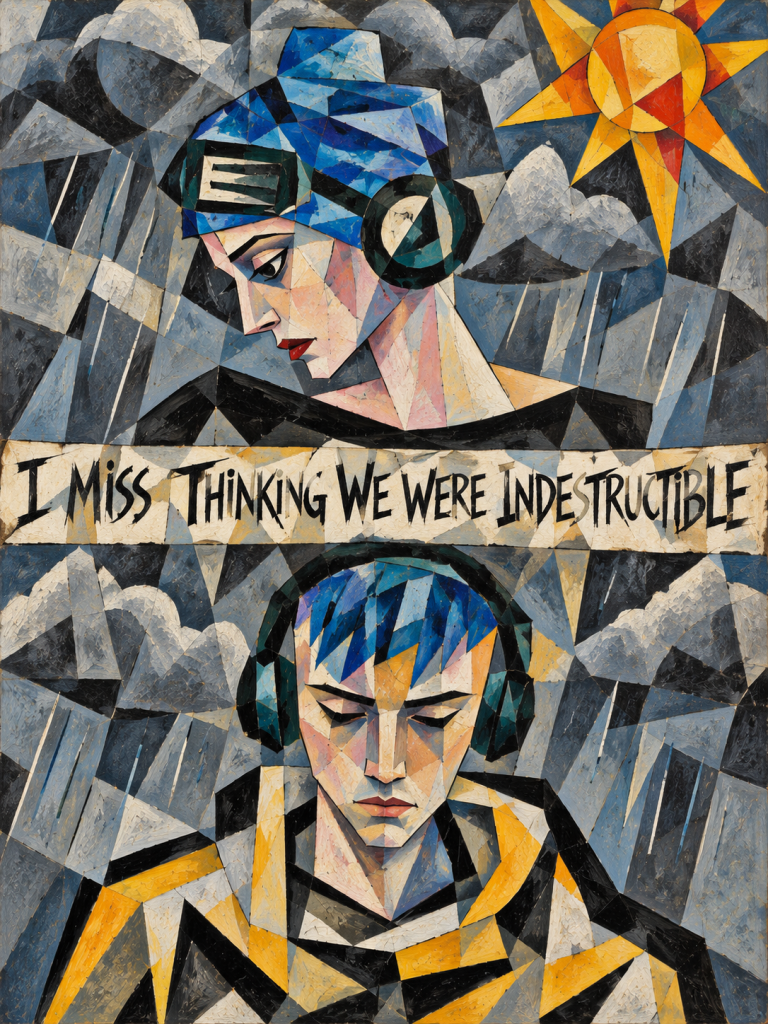
Pablo Picasso – Cubism, geometric shapes and abstract portraits.
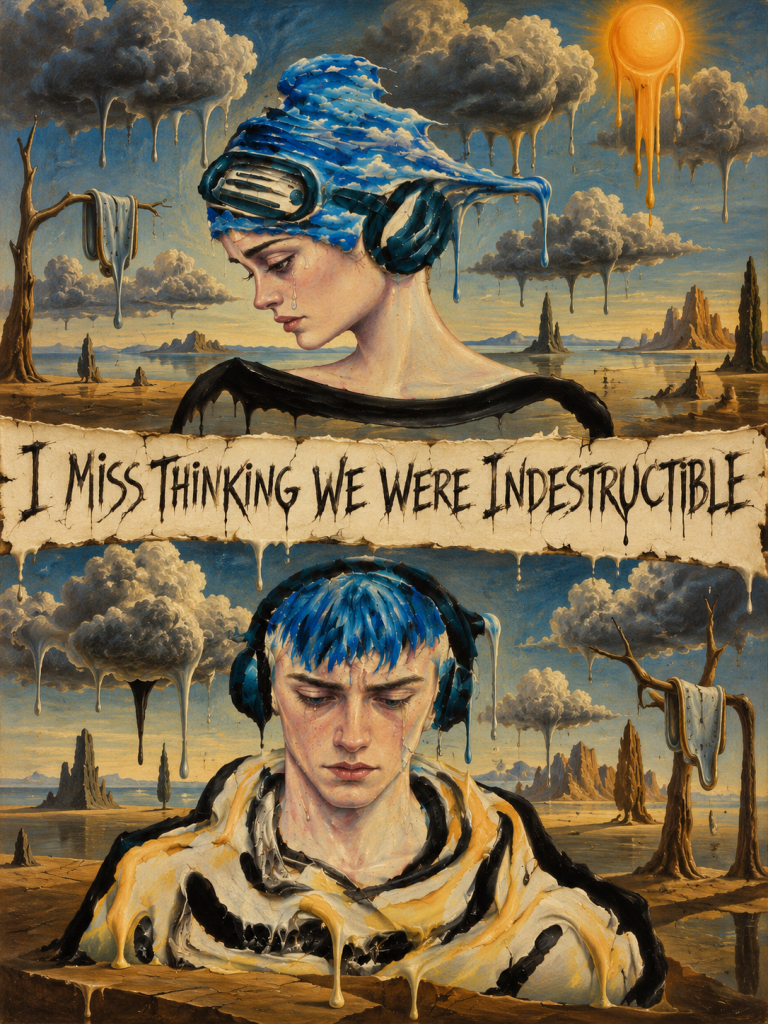
Salvador Dalí – Surrealist paintings, dreamlike imagery and unusual compositions.
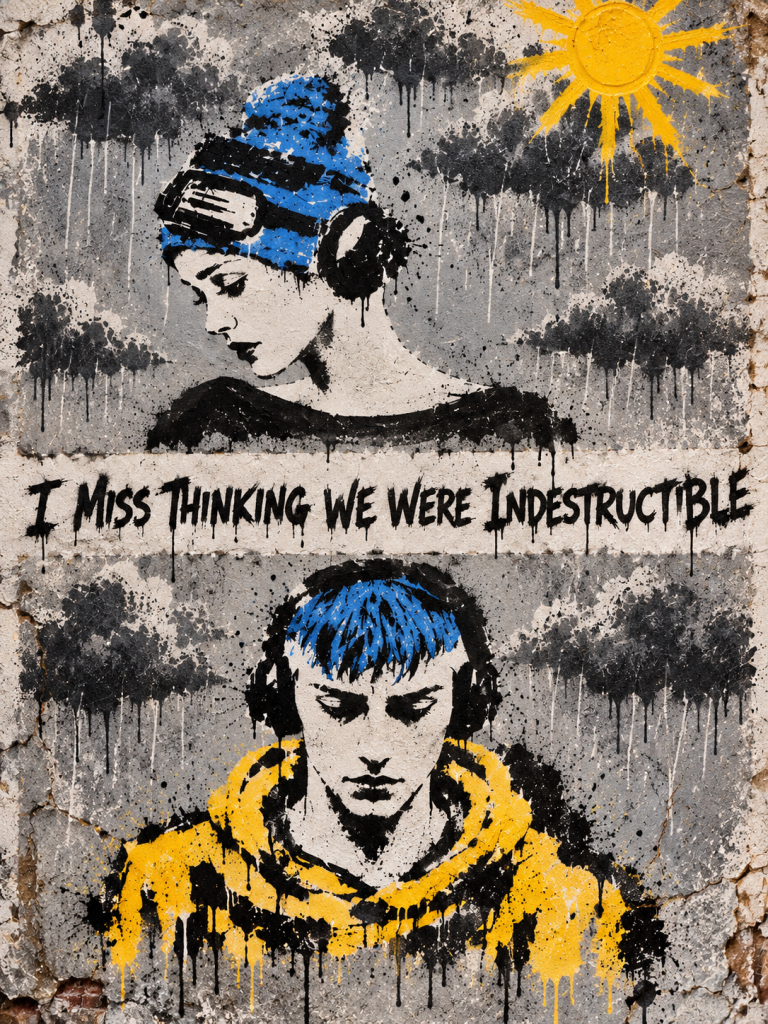
Banksy – Street art, stencil effects and graffiti-inspired artwork.
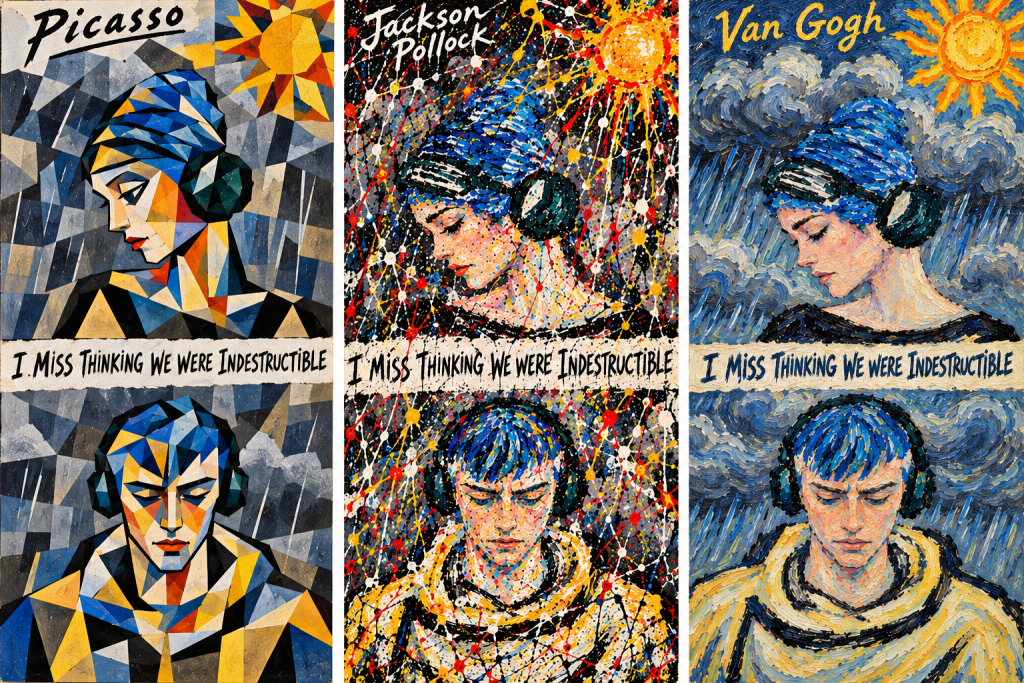
Vincent van Gogh – Expressive brushstrokes, vibrant colours and Post-Impressionism.
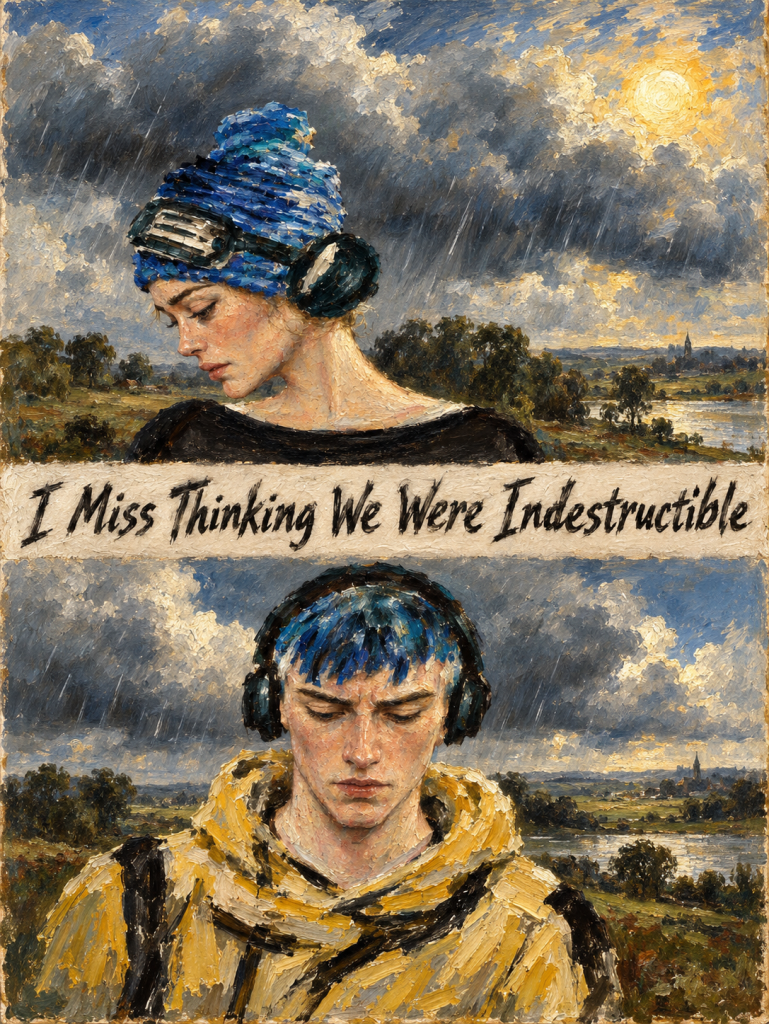
Claude Monet – Impressionist painting, soft colours and natural light.
- John Constable – Traditional English landscape painting, dramatic skies and clouds.
- J. M. W. Turner – Atmospheric landscapes, dramatic light and seascapes.
- Wassily Kandinsky – Abstract art, bold colours and geometric forms.
- Piet Mondrian – Geometric abstract art and primary colours.
- Henri Matisse – Colourful paintings, expressive shapes and Fauvism.
- Edvard Munch – Expressionist art, emotion and dramatic imagery.
- Gustav Klimt – Decorative patterns, gold colours and symbolic portraits.
- Frida Kahlo – Symbolic self-portraits and vivid colours.
- Paul Cézanne – Post-Impressionist painting and structured compositions.
- Jackson Pollock – Abstract Expressionism and energetic paint effects.
- David Hockney – Colourful modern landscapes and distinctive compositions.
- Andy Warhol – Pop Art, repeated images and bright contrasting colours.
- René Magritte – Surrealist paintings and unexpected visual combinations.
- Georgia O’Keeffe – Bold natural forms, flowers and abstract landscapes.
- William Morris – Decorative floral patterns and Arts and Crafts designs.
We can also experiment with photorealistic art, digital painting, watercolour effects, charcoal drawings, pencil sketches, abstract painting, Cubism, Impressionism, Surrealism and contemporary art. Rather than simply copying a famous painting, the idea is to explore different artistic techniques and discover how they can influence your own original artwork.
Learn Acrylic Painting, Drawing and AI Art – Beginners Welcome
Our creative art courses are designed for people who want to try something different, whether you’re interested in learning to paint for the first time or exploring how artificial intelligence can help develop your artistic ideas.
During the course, we can introduce you to:
- Acrylic painting for beginners: Learn how to use acrylic paints, brushes and simple painting techniques.
- Colour mixing and colour theory: Discover how to combine colours, create contrast and develop atmosphere.
- Pencil drawing and sketching: Learn basic drawing, outlining, proportion and composition.
- AI art for beginners: Understand how AI image generators and editing tools work.
- AI image prompts: Learn how to write clear instructions to achieve better results.
- Photo-to-art techniques: Explore turning photographs into paintings and other artwork.
- AI-assisted painting: Develop your own original acrylic painting using digital tools.
- Artistic styles: Experiment with abstract art, realistic portraits, landscapes, famous art movements and different painting effects.
You don’t need to be good at drawing, painting or computers. We’ll introduce the techniques at a pace suitable for you.
Will AI Replace Artists? Come and Find Out!
Artificial intelligence is a fascinating creative tool, but it certainly doesn’t always get things right. During our own experiment, we discovered that AI sometimes moved the wrong part of a picture, changed something we wanted to preserve or misunderstood quite simple instructions. We’ll show you both the impressive possibilities and the limitations of AI, helping you understand why human creativity, artistic judgement and practical painting skills remain so important.
Above all, we want you to enjoy experimenting, making mistakes, learning new skills and discovering what you can create.
Create Your Own Work of Art or a Unique Personalised Gift
By the end of your session, our aim is for you to leave with a piece of artwork that you have helped create.
It could be a portrait, a landscape, an abstract painting, a picture of someone special or a personalised piece of art to give as a birthday, anniversary or Christmas present.
Your finished artwork could become something to display at home or a thoughtful, unusual gift for a friend or family member.
If you wish, bring your own laptop. We can help you get started with a suitable AI art program so that you can continue experimenting and developing your creative skills at home.
Contact Us – AI Art Courses and Beginner Painting Lessons
- Interested in learning acrylic painting, pencil sketching, colour mixing or creating artwork using artificial intelligence?
- Whether you’re a complete beginner, a hobby artist or simply curious about combining traditional art with modern technology, we’d be pleased to hear from you.
Email: [email protected]
Contact us to find out more about our AI Art and Acrylic Painting Courses, beginner art lessons and creative workshops. Bring your imagination. Learn a few painting skills. Discover AI. Create something original.