What is Nature Art?
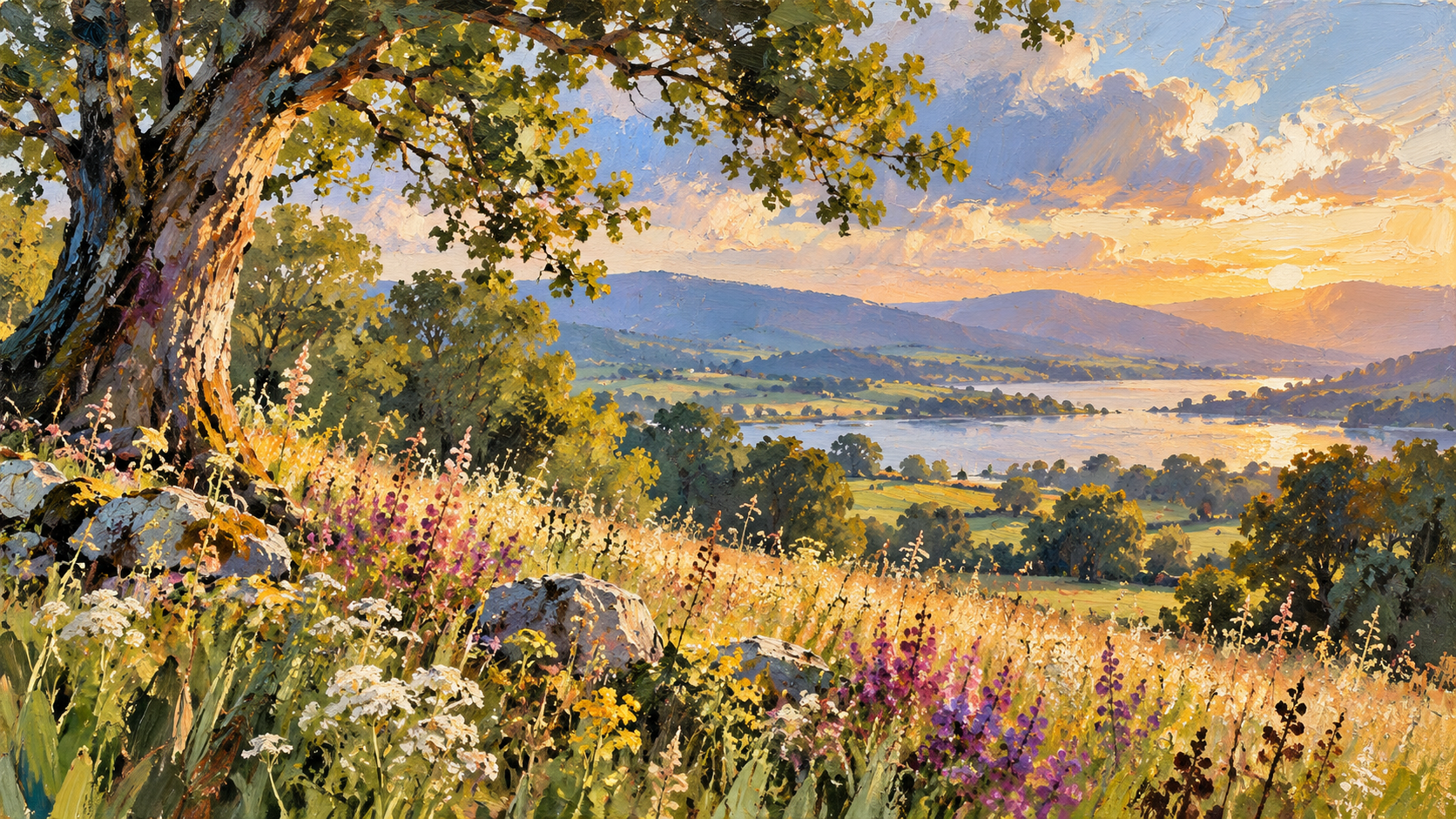
Nature has always been one of the great subjects of art. Long before cameras existed, artists were recording landscapes, plants and animals, both as a way of representing the world around them and as a way of exploring their own ideas about it.
Nature art doesn’t necessarily mean painting a realistic picture of a landscape. It can be almost anything inspired by the natural world — from detailed botanical studies and wildlife paintings to abstract interpretations of trees, flowers, water, mountains or changing seasons.
Artists have often used nature to create a particular feeling. A calm landscape can suggest peace and solitude, while a stormy sky or dramatic coastline can create a very different mood. Sometimes the subject is less important than the atmosphere it creates.
There is also something appealing about bringing an element of the natural world indoors. A painting of a tree, woodland or field can change the feeling of a room without requiring the viewer to actually be there. Art can give us a connection to places that might otherwise be far away.
Flowers and plants have been particularly popular subjects. They can be represented with incredible precision, simplified into shapes and colours, or transformed almost completely into abstract forms. The same flower can therefore become very different things depending on the artist.
Wildlife provides another endless source of inspiration. Birds, animals and insects can become the main subject of an artwork, but they can also be used to tell a story or create a particular atmosphere.
Perhaps one of the most interesting things about nature is that it never stays exactly the same. Light changes, seasons change, plants grow and landscapes evolve. An artist can return to the same place many times and find something different each time.
This also gives artists an opportunity to experiment with colour. A tree doesn’t have to be green, and a sunset doesn’t have to be orange. Artists can exaggerate, simplify or completely change the colours found in nature to create something that reflects their own interpretation.
Modern artists have taken this even further. Nature can be combined with abstract painting, unusual materials, photography, digital art and other techniques. The result doesn’t always look like the natural world at all — but the inspiration can still be there.
Nature can therefore be both the subject of an artwork and the starting point for something much more imaginative.
Perhaps that’s why it continues to inspire artists. There is no shortage of subjects, and there is no single way of representing them.
A tree can simply be a tree. Or it can become colour, shape, memory, atmosphere or an idea.